
Buyers comparing a smart safety harness with the harnesses they already issue usually start from the wrong question — "is the webbing stronger?" It is not. A smart safety harness keeps the same fall-arrest body: certified to the same standards family (GB 6095 for projects inside China, EN 361 or ANSI Z359 where the destination market requires it), same anchorage rules, same lanyard geometry. The arrest works the same. What changes is everything that happens before and after the fall that never comes.
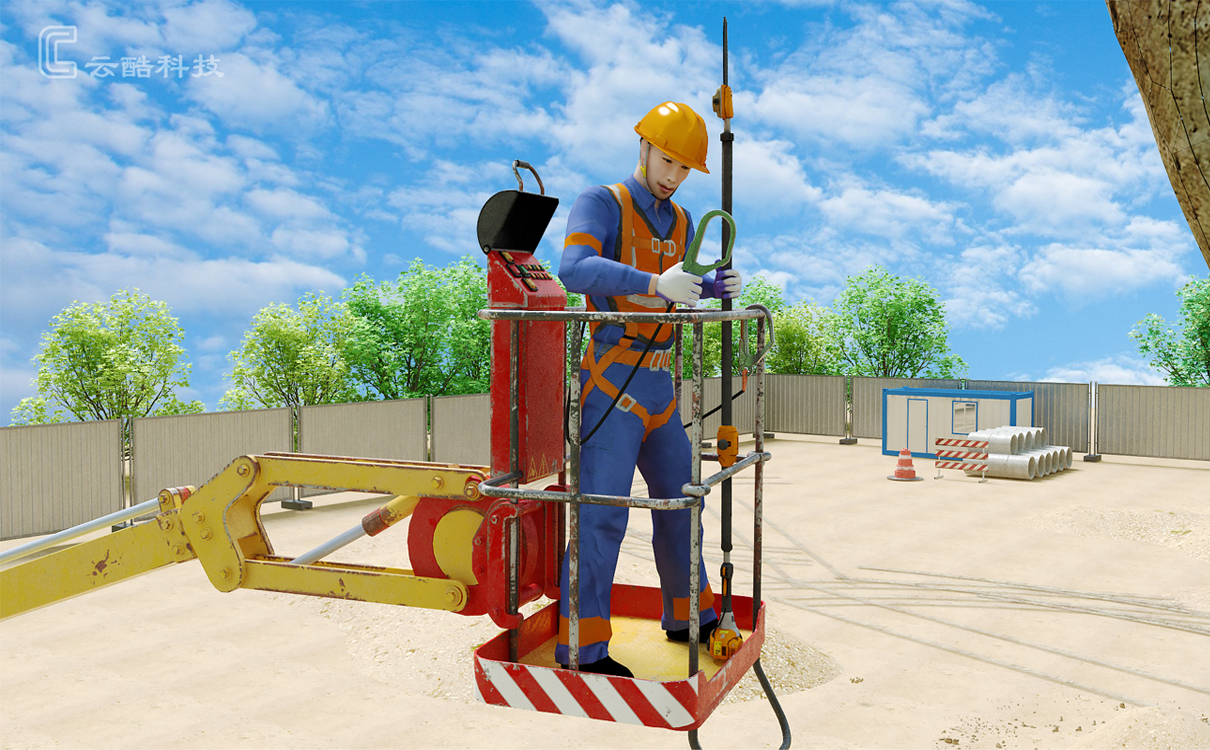
What stays exactly the same
The body of the harness — webbing, dorsal and frontal attachments, buckles — is a fall-arrest product, and every certification on the regular harness still applies to the smart one. The monitor adds no strength and removes none. Load limits, inspection intervals, and retirement criteria stay as written on the label. If a supplier presents a smart harness as a different category of fall protection, treat that as a warning sign rather than a selling point.
What changes for the worker
Almost nothing in the task, and a lot in the feedback. A sensor unit mounted on the harness watches the states that make the difference between protection and theatre: hook clipped or not, anchored above or below the waist (low anchorage), lanyard dragging, double-hook swaps with an unprotected gap, and whether the wearer is on a work face at all. When a state turns unsafe, the worker hears a buzzer within seconds — while the situation can still be fixed, not in a monthly report.
Height detection matters more than crews expect. A unit calibrated barometrically knows the difference between a worker walking the ground and a worker on a platform above two metres, so monitoring starts automatically and does not depend on anyone filing a report.
What changes for the supervisor
The regular harness gives a supervisor one snapshot per spot check. A smart safety harness turns the same checks into a continuous record: who was monitored, which violations occurred, at which face, and whether they were corrected. Records export against work permits, so an audit can match people and times instead of trusting a signature on a form.
- Violations surface in seconds, not at the next inspection — unclipped hooks and low anchorage are the two states spot checks most reliably miss.
- Alarms reach the right person: detection results push over 4G to the crew leader or duty safety officer, and bindings follow the shift roster rather than a single phone.
- Multi-face sites become manageable: dozens of workers at height roll up onto one screen instead of one pair of boots on the ground.
What a smart harness cannot do
Three limits are worth stating plainly, because serious suppliers say them:
- It does not arrest the fall. The harness body and the anchorage do that; the electronics only watch and warn.
- It does not lock hooks on the worker's behalf — a monitored but unclipped hook is still an unclipped hook, and the record proves it.
- It does not replace training or a competent person. The record shows who broke the rule; the safety program still decides what happens next.
When the upgrade pays for itself
Three situations tip the numbers quickly: crews that work at height every shift (the monitoring cost amortises across daily exposure); lone or after-hours work at height, where a spot check is physically impossible; and sites that fail audits on paperwork — the continuous record is the cheapest audit evidence a safety office can buy. Occasional, short, supervised climbs are the case where a regular harness plus existing permit discipline remains a reasonable choice.
What to ask a supplier. Which standard is the harness body certified to; how the monitor behaves with no mobile signal on site; whether the buzzer is audible over plant noise; and how records export against your work permit system. A smart safety harness is an addition to a fall-protection program, not a substitute for one — buy it as a package with the same scrutiny you apply to the body itself.